Overview
Fractures are among the common orthopedic injuries that people face around the globe. A fracture can occur because of both traumatic and non-traumatic causes, and its type and severity depend on the cause. However, in some cases, a fracture occurs unknowingly. This means the person will be suffering from a fracture but he/she is not aware of that. Such a fracture does not occur with a single trauma like in other cases. It develops over time. These fractures are known as stress fractures. This is what we will be discussing in the post. Let us start with a brief introduction to the fracture.
What is a Stress Fracture?
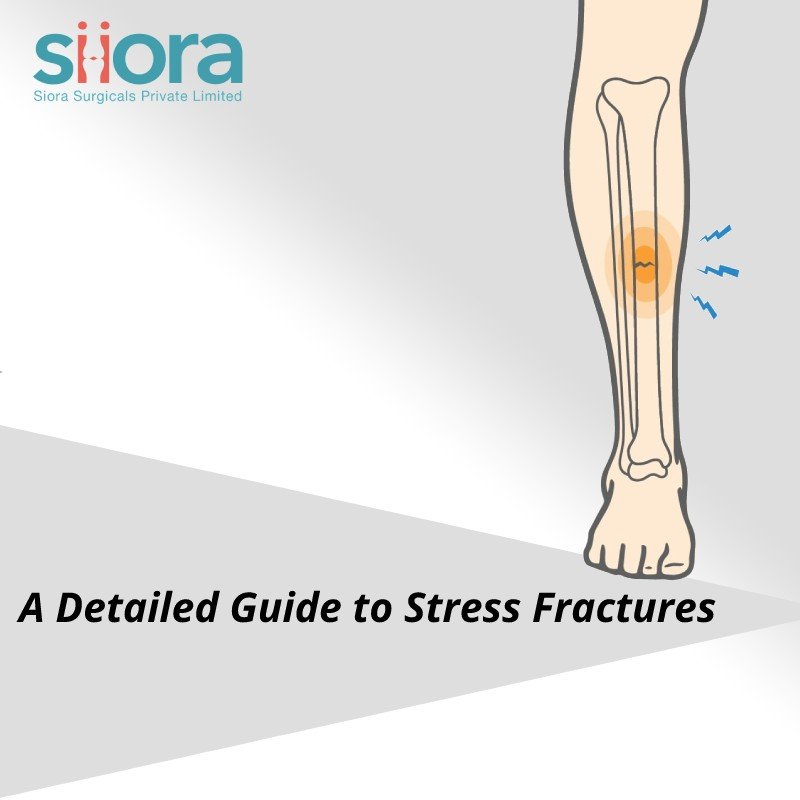
A stress fracture is a small crack or a break in a bone that develops because of repetitive movements or overuse of that bone. These fractures often occur in the bones of the lower extremity as the lower half of the body bears most of our body weight. So, more stress on the bones in that region results in the development of a stress fracture.
Besides this, normal body movements like walking or running can also develop a stress fracture. This is true for people who are suffering from conditions like osteoporosis.
Bones in the lower leg and foot are more prone to fractures that occur because of stress. Athletes, sportspeople, and military recruits are at high risk of developing stress fractures. This is because of the nature of their jobs. However, these types of fractures are not limited only to them, as anyone can sustain such a fracture.
How do Stress Fractures Occur?
Stress fractures occur when bones are subjected to repetitive force or overuse, often from high-impact activities like running, jumping, or dancing. Unlike acute fractures caused by a single impact, stress fractures develop gradually as the bone fails to repair itself between repeated stresses. Muscles usually absorb shock, but when they become fatigued, the load shifts to the bones, increasing the risk of tiny cracks. Factors like poor conditioning, sudden increases in activity, improper footwear, and low bone density can raise the likelihood of stress fractures. Common sites include the shin, foot, and hip. Without proper care, stress fractures can worsen and lead to more serious injuries.
How Common Are Stress Fractures?
Stress fractures are fairly common, especially among athletes and individuals with high physical activity levels. They account for about 10% of all sports-related injuries, and up to 20% in runners. These small cracks in bones typically occur from repetitive force or overuse, often without a specific traumatic event. Risk increases with sudden changes in activity, improper training, poor footwear, or underlying conditions like osteoporosis. Women, particularly those with menstrual irregularities, face a higher risk due to lower bone density. Military recruits and dancers are also frequently affected. Early diagnosis and proper rest are crucial to avoid complications.
Which Are the Common Locations for a Stress Fracture to Develop?
Any bone in our body can sustain a stress fracture if it is overused. However, the bones in the lower extremity of our body are more at risk of developing a crack because of weight-bearing activities and the impact they bear. The shin bone and bones in the foot are the common locations for stress fractures develop.
If we specifically talk about the bones that get affected in the foot the most are the second and third metatarsals.
Besides this, other bones that can sustain this type of fracture are the heel bone, lower back, and proximal Humerus.

What Are the Causes of Stress Fractures?
Stress fractures occur because of overuse injuries and there are two categories of risk factors associated with the condition:
Extrinsic factors
Intrinsic factors
Extrinsic Factors
As the name suggests, extrinsic factors are those that occur outside the body. This is when injuries or other conditions that affect from outside the body result in a stress fracture. Extrinsic factors include:
- Doing exercise or training with an incorrect technique
- Trying to do too much in too less time
- Using a different surface to exercise than you normally use like concrete, gravel, or a soft surface
- Running on a sloped surface
- Use of poor-quality shoes or training equipment
- Repetitive activities and high-impact sports like long-distance running, basketball, tennis, gymnastics, or dancing
- Having a poor diet with a low nutritional profile
- Low vitamin D levels in the body
- Playing sports continuously round the year without any breaks
Intrinsic Factors
Intrinsic factors are the ones that are not affected by extrinsic factors. These factors can also cause stress fractures. Here are some of the common internal factors:
Age
Aging is the commonest cause of orthopedic injuries, especially fractures. Our bone density drops as age increase, and hence, older athletes have the highest chances of developing a stress fracture over time. This is why it is important to take regular breaks while playing sports or doing high-impact activities.
Weight
Whether it is a stress fracture or other orthopedic injuries, being overweight is always a bad idea. Obese are at the highest risk of sustaining a stress fracture. This is because bones are already under stress because of high muscle mass and more wear & tear occur. Hence, a fracture is on the cards.
While on the other hand, people with low BMI have weaker bones, and hence, a crack may develop event while doing routine activities.
Foot Problems
Certain foot problems can also increase the risk of the development of a crack in the bone of the feet. This is because abnormal foot anatomy affects the way our feet hit the ground while walking or running. It causes undue stress. Some of the food problems that may cause a fracture include blisters, bunions, tendonitis, and higher or lower foot arches.
Gender
Studies have found that females who have irregular or no menstrual periods are at high risk of developing a crack in one of the bones, especially the ones in the lower extremity.
Medical Problems
People suffering from conditions like osteoporosis have weaker bones and hence, the risk of stress fractures is highest. Osteoporotic people may even develop a crack in the bone while running or lifting heavy objects.
What Are the Symptoms of Stress Fractures?
Fractures are always painful and in the case of stress fractures, pain develops and persists for a long. Besides this, pain is also accompanied by itching, and swelling at the fracture site. In most cases, the person feels pinpoint pain when someone touches the site of injury.
Pain associated with a stress fracture often starts with activity and goes away with rest. In some cases, the pain persists all the time and improves with pain medicine before arising again. Timely treatment of stress fractures is important as if delayed, it may become severe. Besides this, delay in the treatment also increases the risk of the development of a displaced fracture.
What Are the Risk Factors for a Stress Fracture?
Risk factors for a stress fracture include:
Repetitive activity – High-impact sports increase the likelihood of stress fractures, including running, gymnastics, and basketball.
Sudden increase in activity – Rapidly boosting intensity, duration, or frequency of exercise stresses bones.
Poor technique or equipment – Improper form or worn-out shoes can add uneven pressure on bones.
Low bone density – Conditions like osteoporosis weaken bones, making fractures more likely.
Nutritional deficiencies – Lack of calcium or vitamin D impairs bone strength.
Female athlete triad – Irregular menstruation, disordered eating, and low bone mass raise fracture risk.
Previous stress fractures – A history of fractures increases recurrence chances.
Improper training surfaces – Hard or uneven surfaces elevate bone stress.
Low muscle strength – Weak muscles fail to absorb shock, transferring the load to bones.
Do Biomechanics Matter for the Development of a Stress Fracture?
Yes, biomechanics plays a critical role in the development of stress fractures. Poor movement patterns, such as overpronation, improper gait, or muscle imbalances, can increase stress on specific bones. This could occur during repetitive activities like running or jumping. These mechanical inefficiencies lead to uneven force distribution, overloading certain areas, and reducing the bone’s ability to repair itself between impacts. Over time, this can result in microdamage accumulating faster than the body can heal, leading to a stress fracture. Additionally, factors like poor footwear, weak core stability, or altered joint alignment can worsen biomechanical stress. Therefore, addressing biomechanics through physical assessment and corrective training is essential to prevent stress fractures and support long-term bone health.
Does Baseline Bone Health Protect Against Stress Fractures?
Yes, baseline bone health plays a key role in protecting against stress fractures. Strong bones with high mineral density are better able to withstand repetitive mechanical stress, reducing the risk of micro-damage that can develop into a stress fracture. Factors like adequate calcium and vitamin D intake, regular weight-bearing exercise, and hormonal balance all contribute to optimal bone health. Individuals with poor bone density, due to conditions like osteoporosis, nutritional deficiencies, or hormonal imbalances, are more susceptible to stress fractures, especially under increased physical demands. While good bone health doesn’t guarantee immunity, it significantly lowers the risk.
What is the Diagnosis of a Stress Fracture?
Diagnosing a stress fracture is not easy as symptoms develop late, and people often ignore such symptoms. However, the orthopedic specialist will order several tests to identify or confirm a stress fracture along with its severity.
Besides doing tests, the orthopedic specialist will perform a physical examination. During that, the healthcare service provider will ask about the symptoms, nature of the job (occupation) of the patient, medical history, and any medicines he/she is taking.
X-rays
At first, the healthcare service provider will order an X-ray. Examining a stress fracture in an X-ray report is difficult, as it does not show up. This is because X-rays cannot show small cracks. However, X-rays can show the healing of a stress fracture because during the healing phase, a callus or lump develops, and X-rays can detect that.
Bone Scans
Now, as x-rays fail to detect a stress fracture, the orthopedic specialist will order a bone scan. During the scanning process, the healthcare service provider injects a radioactive substance (tracer) into the bloodstream, which collects in the areas where the stress fracture is or is healing. During the scan, the fracture will appear darker, if it is there.
Magnetic Resonance Imaging (MRI)
MRI produces highly detailed images of the body section, and in some cases, the healthcare service provider will order the same for a thorough examination. MRI is often the choice of option because of no radiation exposure, quick scan, and the better images it produces.
What is the Treatment for Stress Fractures?
Stress fractures do not require surgery, as conservative non-operative methods are sufficient to fix the problem. During the treatment, the orthopedic specialist will ask the patient to stop doing activities that aggravate pain. Besides this, other treatment strategies that may be tried include:
- Ice massage on the injury for 10 minutes at once multiple times a day
- Rest
- Non-impact exercises under the guidance of the specialist (only if suggested)
- Physical therapy
- OTC or prescription drugs to relieve pain & inflammation
- Using protective footwear to reduce stress on the foot/leg
- Using assistive devices to prevent any further stress on the injured area until it heals
- In some cases, the orthopedic specialist will apply a cast to keep the fracture aligned well and weight off it
- Sometimes, a stress fracture develops big, and, in such cases, internal fixation is required. This involves the use of trauma implants like orthopedic plates, bone screws, pins, or wires
How to Prevent a Stress Fracture?
It is not difficult to minimize the risk of a stress fracture, as all you need to do is:
- Use the right equipment and training techniques
- Wear high-quality footwear and change timely manner
- Do not overdo exercises, and stop when you feel pain
- Slowly change your exercise regimen and smoothly increase the intensity of your exercise
- Always warm up before playing sports
- Maintain a healthy weight
- Take a healthy and complete diet
- Maintain calcium and vitamin D levels
- Take timely breaks and give your body much-needed time to relax
- Stay in touch with the sports specialist/doctor for regular health monitoring
Siora Surgicals Pvt. Ltd. is a leading orthopedic device manufacturer in India with a strong global presence. The CE-certified range of orthopedic implants manufactured by the company is supplied and exported to around 130 global distributors and orthopedic surgeons. Siora has served clients in 40+ countries and is also known as a trustworthy OEM/contract manufacturing service provider. It also provides HA-coated implants on the client’s demand.
