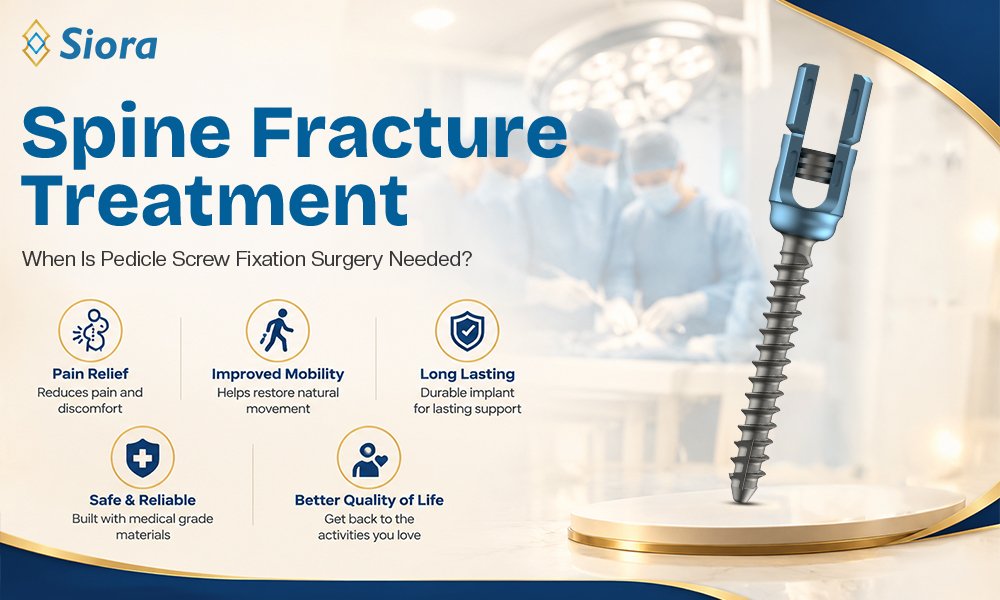



A spine fracture can range from a stable injury that heals with rest and support to a complex fracture that threatens spinal stability or the spinal cord. Choosing the right spine fracture treatment depends on the fracture pattern, location, severity, neurological condition, bone quality, and overall health of the patient. Some injuries respond well to medication, bracing, and activity modification, while unstable fractures may require spine fracture surgery to restore alignment and provide mechanical stability.
Among the available spine fracture treatment options, pedicle screw fixation is widely used for selected unstable spinal injuries. It allows surgeons to stabilize the affected vertebral segment using screws placed through the vertebral pedicles and connected with rods. However, surgery is not automatically required for every spinal fracture. A careful clinical and imaging assessment is essential before deciding between conservative and surgical treatment.
What Is a Spine Fracture?
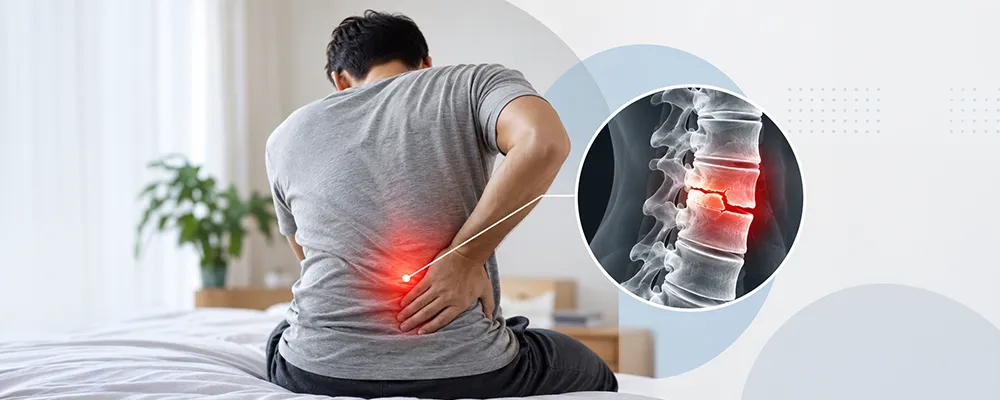
A spine fracture is a break or structural injury involving one or more vertebrae, the individual bones that form the spinal column. It may affect the front, middle, or back portions of a vertebra and can occur in the cervical, thoracic, lumbar, or sacral region.
A spinal fracture, also called a vertebral fracture, can be stable or unstable. A stable injury generally maintains the normal alignment and supporting structures of the spine, whereas an unstable fracture may allow abnormal movement between spinal segments. In severe cases, displaced bone fragments can narrow the spinal canal and affect the spinal cord or nerve roots.
Common spine fracture symptoms include localized back or neck pain, tenderness, stiffness, difficulty moving, and pain that increases with activity. Neurological symptoms such as numbness, weakness, tingling, or problems controlling the bladder or bowel may indicate a more serious injury requiring urgent medical assessment.
What Are the Common Types of Spine Fractures?
There are several types of spine fractures, and classification helps doctors understand the stability and severity of an injury.
- Compression fracture of spine: Usually involves collapse of the front portion of a vertebral body. It can occur after trauma or in weakened bones, such as those affected by osteoporosis.
- Burst fracture of spine: A higher-energy injury in which the vertebral body breaks into multiple fragments. Some fragments may move toward the spinal canal.
- Chance fracture: A flexion-distraction injury that can involve the vertebral body, pedicles, and posterior spinal elements. It may be associated with abdominal injuries, particularly after high-energy trauma.
- Fracture-dislocation: A severe injury involving both fracture and displacement of spinal segments. It is generally considered unstable.
- Transverse process or spinous process fractures: These involve specific posterior parts of a vertebra and may be stable depending on the injury pattern.
Modern spinal fracture classification systems consider factors such as morphology, integrity of supporting spinal structures, neurological status, and the patient’s clinical condition.
What Causes Spine Fractures?
The causes of spine fracture vary considerably. High-energy trauma is a major cause, particularly in younger adults. Road traffic accidents, falls from height, sports injuries, and direct blows can generate enough force to damage the vertebrae.
In older adults, reduced bone density can make the spine more vulnerable. A relatively minor fall may result in a vertebral compression fracture when osteoporosis has weakened the bone.
Other spinal injury causes can include:
- Motor vehicle or motorcycle accidents
- Falls from height
- Contact or high-impact sports
- Industrial or workplace accidents
- Osteoporosis-related bone weakness
- Certain pathological conditions affecting bone strength
Understanding what causes a spine fracture is important because treatment must address both the fracture itself and underlying factors such as poor bone quality.
What Are the Symptoms of a Spine Fracture?
Spine fracture symptoms depend on the location and severity of the injury. Some fractures cause significant pain, while others may initially produce relatively mild symptoms.
Common signs include:
- Sudden or persistent back or neck pain
- Localized tenderness
- Muscle stiffness or spasm
- Reduced spinal movement
- Pain that becomes worse with standing or movement
- Changes in posture
- Numbness or tingling
- Limb weakness
More concerning fractured spine symptoms include loss of sensation, progressive weakness, difficulty walking, or bladder and bowel dysfunction. These may suggest neurological involvement and require immediate medical attention.
How Is a Spine Fracture Diagnosed?
Diagnosis begins with a detailed history and physical examination. The doctor evaluates how the injury occurred, pain location, spinal tenderness, movement, and neurological function.
Imaging plays a central role.
X-rays can identify many fractures and changes in spinal alignment.
CT scans provide detailed information about bone fragments, fracture patterns, and spinal stability.
MRI may be recommended when there is concern about spinal cord, nerve roots, discs, ligaments, or other soft tissues.
The combination of clinical findings and imaging helps determine whether the injury is stable and suitable for non-surgical care or requires surgical stabilization.
How Is a Spine Fracture Treated?
Spine fracture treatment is individualized. Stable fractures without neurological compromise may often be managed without surgery. Conservative treatment for spine fracture can include pain medication, temporary activity modification, bracing when appropriate, and gradual rehabilitation under medical supervision.
Non-surgical spine fracture treatment may be suitable when spinal alignment is acceptable, and there is no significant instability or neurological deterioration.
Surgery becomes more relevant when the fracture is unstable, significantly displaced, associated with neurological compression, or unlikely to maintain alignment with conservative care. Such cases often require application of spine implants.
The main spine fracture treatment options can therefore include:
- Pain management
- Bracing in selected cases
- Activity modification
- Physical rehabilitation
- Vertebral augmentation for selected compression fractures
- Surgical decompression and stabilization
- Instrumented fixation using systems such as pedicle screws and rods
When Does a Spine Fracture Require Surgery?
Not every spinal fracture requires spinal fracture surgery. The decision is based on several factors rather than the fracture label alone.
Surgical treatment for spine fracture may be considered when there is significant spinal instability, progressive deformity, substantial vertebral collapse, severe displacement, or compression of neural structures. A fracture associated with neurological impairment may also require urgent surgical evaluation.
Surgery may additionally be recommended when a fracture cannot be adequately maintained in acceptable alignment using conservative measures or when pain and instability remain significant. In some cases, such as severe degeneration or spondylolisthesis, spinal fusion surgery is performed.
The exact approach depends on the fracture’s anatomy and the patient’s individual circumstances. The objective is not simply to insert implants, but to restore or maintain spinal stability while protecting neurological structures.
What Is Pedicle Screw Fixation Surgery?
Pedicle screw fixation is an instrumented stabilization technique used in selected spinal conditions, including certain unstable fractures. In this procedure, specialized screws are inserted through the pedicles of vertebrae. The screws are connected using rods to create a stable construct across the injured spinal segment.
During pedicle screw fixation surgery, the surgeon plans screw placement using preoperative imaging and anatomical positions. Depending on the injury and surgical approach, fixation may be performed through an open technique or a minimally invasive approach.
The purpose of pedicle screw fixation for spine fracture is to provide mechanical stability, support spinal alignment, and facilitate healing while allowing appropriate mobilization and rehabilitation.
How Does Pedicle Screw Fixation Treat a Spine Fracture?
Pedicle screw fixation for spinal fracture works by creating a stable framework around the injured vertebral segment. Screws anchored in the vertebrae above and below the fracture can be connected with rods, helping control excessive movement.
In appropriate cases, spine fracture fixation can help maintain correction of abnormal alignment and reduce mechanical stress on the injured area. If bone fragments are compromising neurological structures, decompression may also be performed when clinically indicated.
The specific number and placement of screws depend on fracture morphology, bone quality, spinal level, stability requirements, and the surgeon’s treatment plan. Implant selection should always be based on the patient’s anatomy and surgical requirements.
Open vs. Minimally Invasive Spine Fracture Surgery
Traditional open surgery provides direct exposure of the surgical area and may be appropriate for complex injuries requiring extensive correction or decompression.
Minimally invasive spine fracture surgery uses smaller incisions and specialized instruments to place fixation with less disruption of surrounding tissues. In carefully selected patients, this approach may reduce soft-tissue damage and support earlier postoperative mobility.
Neither approach is universally better. The fracture pattern, neurological condition, anatomy, surgeon expertise, and overall health determine which technique is most appropriate.
What Factors Determine the Need for Surgical Fixation?
Several factors influence whether pedicle screw surgery for spine fracture is appropriate:
- Fracture stability and classification
- Degree of vertebral collapse or displacement
- Spinal alignment and deformity
- Spinal canal compromise
- Neurological symptoms or deficits
- Integrity of supporting ligaments
- Bone quality
- Patient’s age and general health
- Ability to tolerate or benefit from conservative treatment
- Expected ability to mobilize safely
A multidisciplinary evaluation may be appropriate for complex injuries. The final treatment decision should be made by a qualified spine specialist after reviewing clinical findings and imaging.
What Is the Recovery Process After Spine Fracture Surgery?
Recovery after spinal fracture surgery varies according to the fracture, surgical technique, patient’s health, and whether neurological injury is present. Early care generally focuses on pain control, wound management, neurological monitoring, and safe mobilization.
Physical therapy may be introduced progressively to improve mobility, strength, balance, and functional independence. Patients are typically advised to follow restrictions on lifting, bending, or high-impact activities until the treating surgeon confirms adequate healing and stability.
Follow-up appointments and imaging may be used to assess spinal alignment, fracture healing, and the condition of the fixation construct. Patients with osteoporosis or reduced bone density may also need evaluation and treatment to reduce the risk of future fractures.
Ultimately, the goal of treatment for spine fracture is to achieve the best possible balance between fracture healing, spinal stability, neurological protection, pain control, and functional recovery. Pedicle screw fixation surgery can be an important option for appropriately selected unstable fractures, but the decision should always be individualized rather than based on the fracture diagnosis alone.
Explore Siora’s latest spinal implant solutions and other orthopedic products at the upcoming World Health Expo 2027 Dubai.