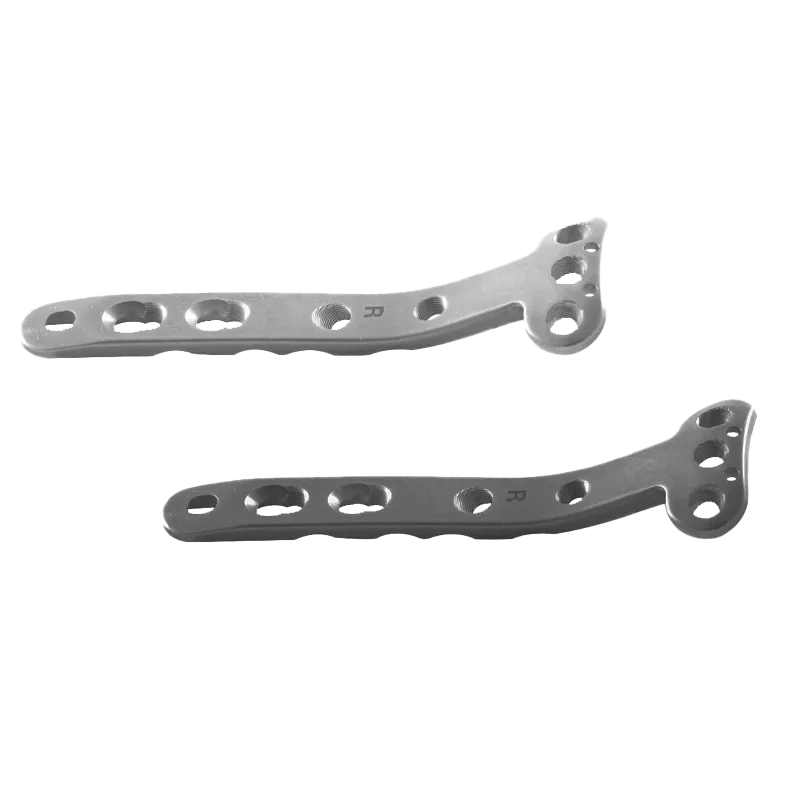
Locking Proximal Medial Tibia Plate 3.5/4.0mm
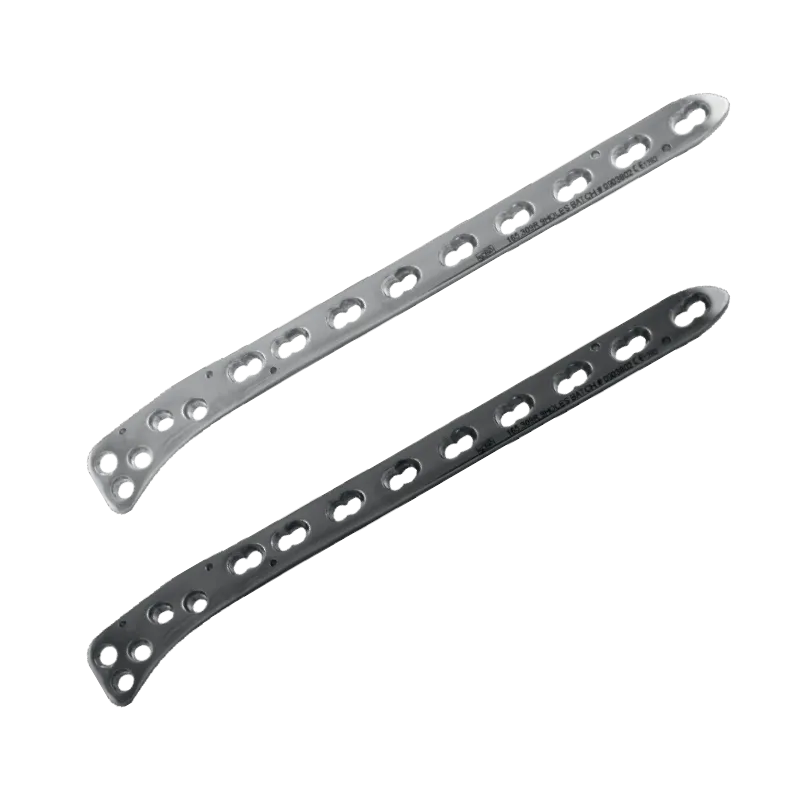
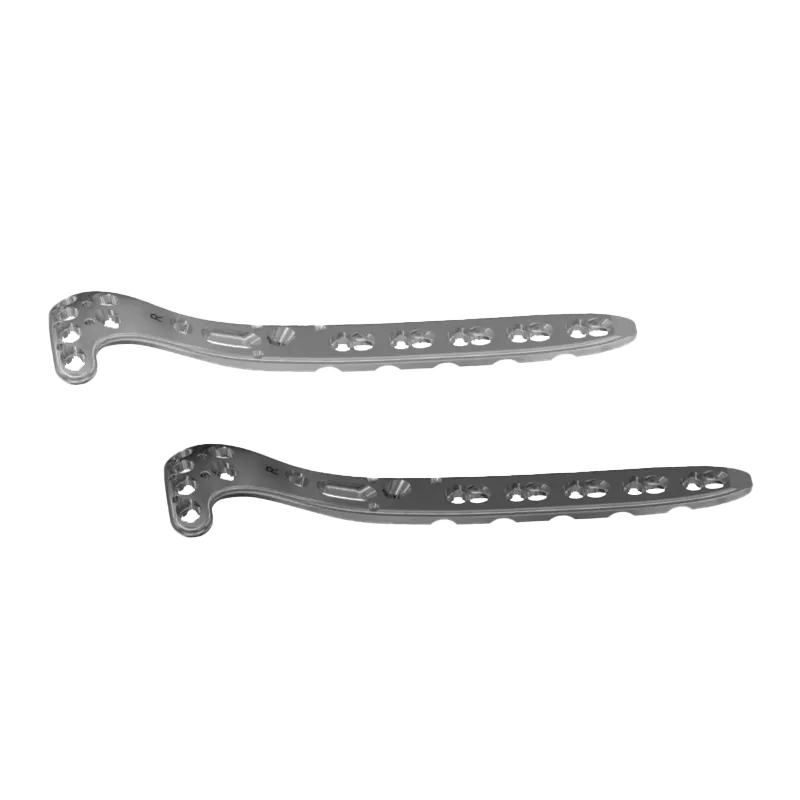
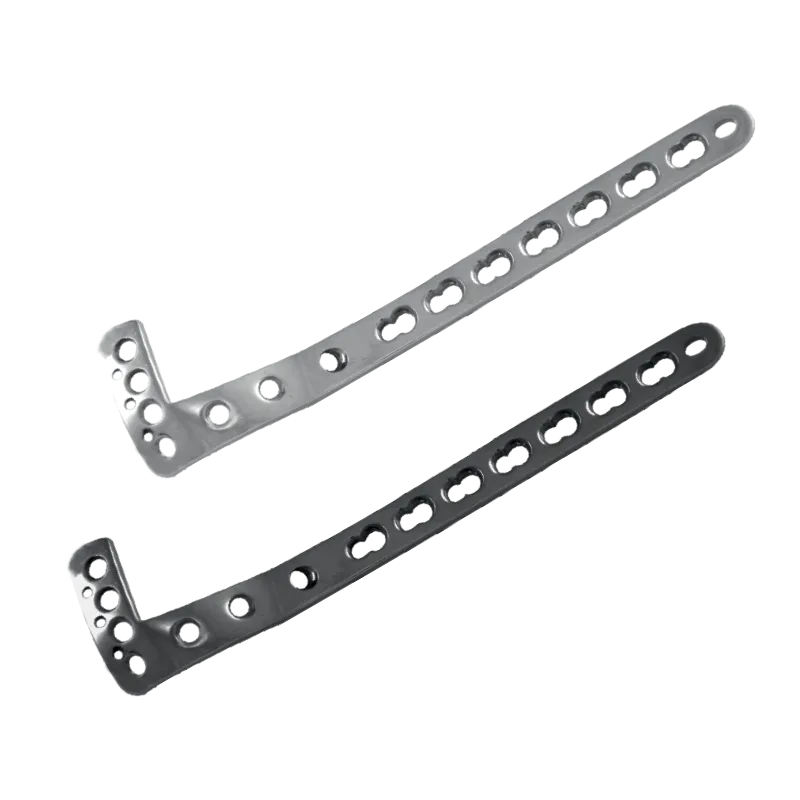
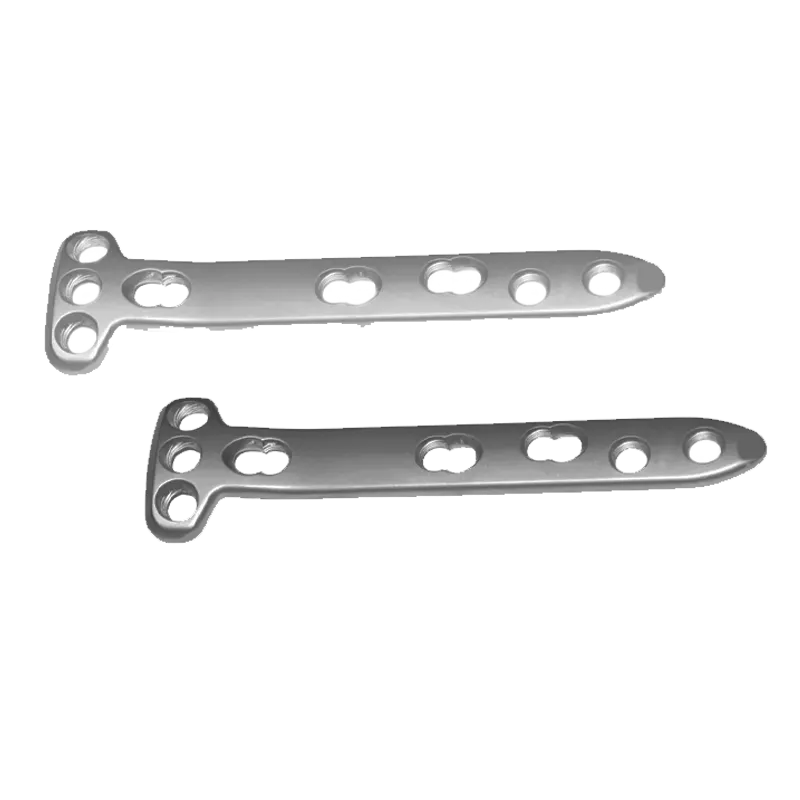
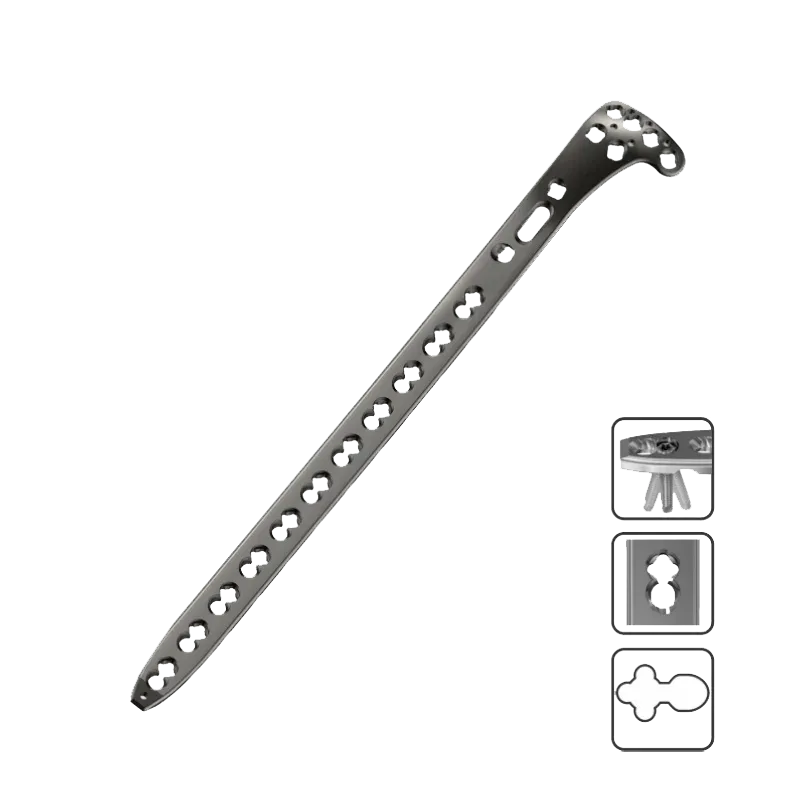
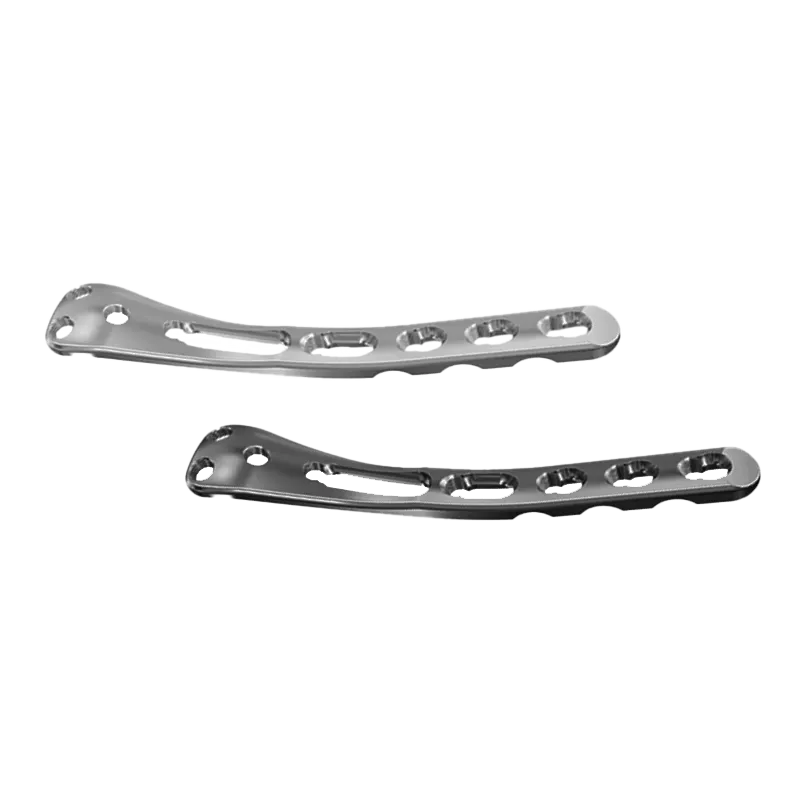
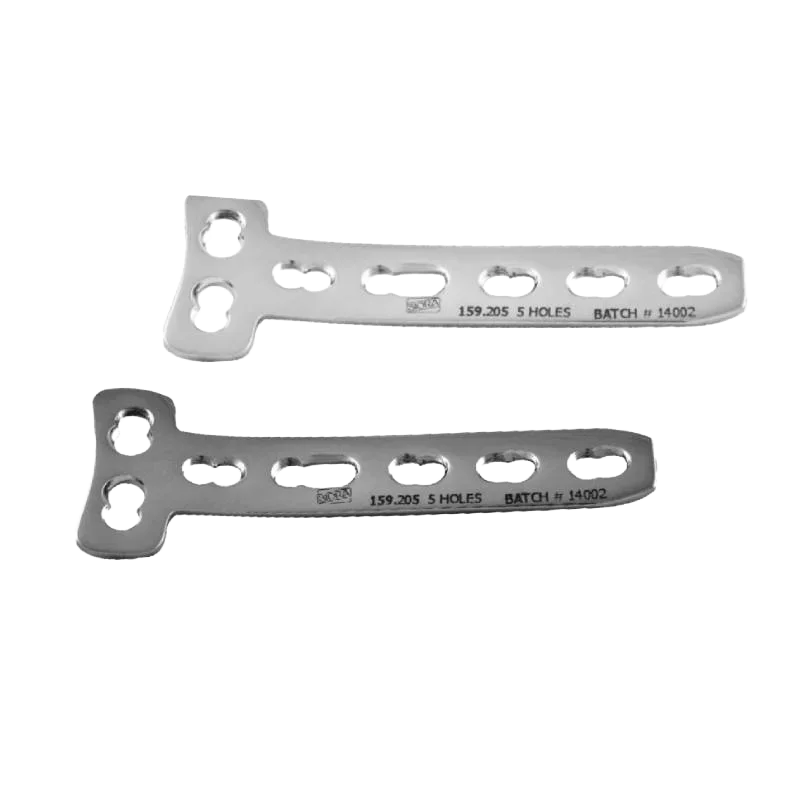


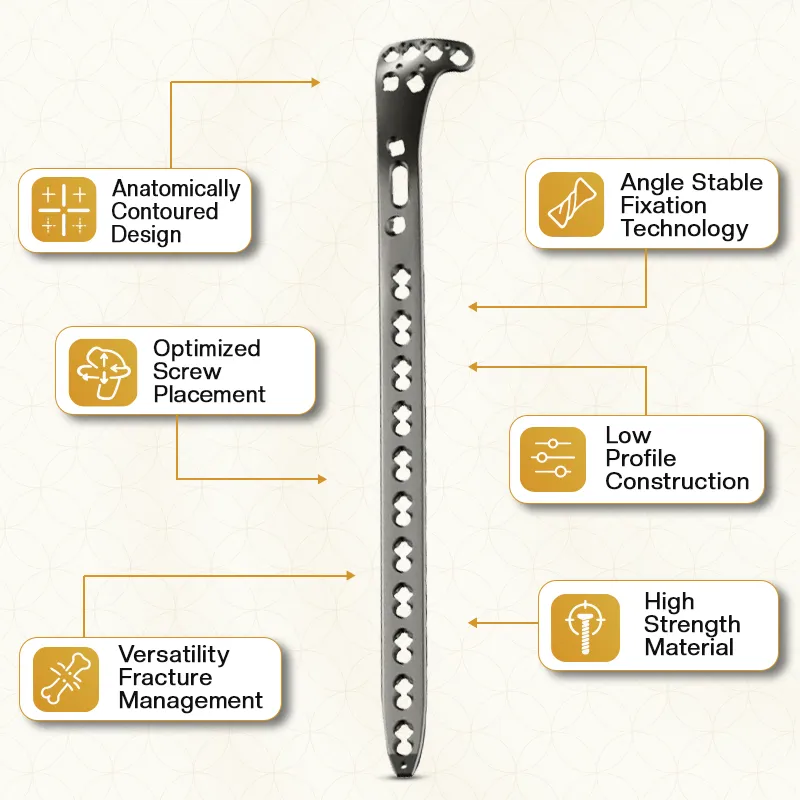
Siora Surgicals Pvt. Ltd.’s Locking Proximal Tibia Plates are made to deliver stable fixation in complex proximal tibial fractures, including metaphyseal and intra-articular patterns. Designed with anatomically contoured profiles, these tibia locking plates ensure a precise fit while minimizing soft tissue irritation. The locking screw mechanism creates a fixed-angle construct, enhancing stability in osteoporotic bone and reducing the risk of screw loosening. Strategically placed screw holes allow surgeons to achieve optimal fragment fixation and alignment. Manufactured from medical-grade stainless steel or titanium, the proximal tibia locking plates offer high strength, corrosion resistance, and biocompatibility, supporting reliable healing outcomes and improved patient recovery in demanding orthopedic procedures.
Here’s our comprehensive range of locking proximal tibia plates designed to address different fracture patterns and patient anatomies.

Designed for lateral proximal tibia fractures, this plate offers strong angular stability with its locking mechanism. Its anatomical contour supports precise reduction, while multiple screw options enhance fixation in complex and intra-articular fracture patterns.
| Cat No. (Stainless Steel) | Holes | Cat No. (Titanium) |
| 165.403L – 165.413L | 3 – 13 (Left) | Ti.165.403L – Ti.165.413L |
| 165.303R – 165.313R | 3 – 13 (Right) | Ti.165.303R – Ti.165.313R |
Engineered to act as a supportive strut, this plate reinforces medial column stability in proximal tibial fractures. It helps maintain alignment and prevents collapse, especially in comminuted or osteoporotic bone conditions.
| Cat No. (Stainless Steel) | Holes | Cat No. (Titanium) |
| 883.005 – 883.013 | 5 – 13 (Left) | Ti.883.005 – Ti.883.013 |
| 883.105 – 883.113 | 5 – 13 (Right) | Ti.883.105 – Ti.883.113 |
Specially designed for tibial plateau fractures, the raft configuration supports subchondral bone and prevents articular surface collapse. It ensures stable fixation and promotes accurate joint surface reconstruction.
| Cat No. (Stainless Steel) | Holes | Cat No. (Titanium) |
| 863.003 – 863.011 | 3 – 11 (Left) | Ti.863.003 – Ti.863.011 |
| 863.103 – 863.111 | 3 – 11 (Right) | Ti.863.103 – Ti.863.111 |
Ideal for high tibial osteotomy procedures, this plate provides rigid fixation and maintains correction angles. Its strong locking construct supports early mobilization and long-term alignment stability.
| Cat No. (Stainless Steel) | Size | Cat No. (Titanium) |
| 159.305 | Standard | Ti.159.305 |
Designed for posterior medial tibial fractures, this plate ensures stable fixation in difficult-to-access regions. Its contour fits the anatomy well, supporting secure fragment stabilization and optimal healing.
| Cat No. (Stainless Steel) | Holes | Cat No. (Titanium) |
| 873.002 – 873.010 | 2 – 10 | Ti.873.002 – Ti.873.010 |
Provides reliable fixation for medial proximal tibia fractures with an anatomical design and locking screw support. It ensures stability, especially in osteoporotic bone, while promoting proper fracture alignment and healing.
| Cat No. (Stainless Steel) | Holes | Cat No. (Titanium) |
| 160.304 – 160.312 | 4 – 12 (Left) | Ti.160.304 – Ti.160.312 |
| 160.314 – 160.322 | 4 – 12 (Right) | Ti.160.314 – Ti.160.322 |
Primarily used for proximal tibial plateau fractures, this locking T-plate offers strong structural support, secure fixation, and optimal outcomes in osteopenic bone conditions and comminuted fractures.
| Cat No. Stainless Steel | Holes | Cat No. Titanium |
| 159.203 – 159.209 | 3 – 9 | Ti.159.203 – Ti.159.209 |

Offers flexibility in screw placement with variable angle locking technology, allowing surgeons to target specific fracture fragments. It enhances fixation in complex lateral tibial plateau fractures with improved adaptability.
| Cat No. (Stainless Steel) | Holes | Cat No. (Titanium) |
| 891.004 – 891.014 | 4 – 14 (Left) | Ti.891.004 – Ti.891.014 |
| 891.104 – 891.114 | 4 – 14 (Right) | Ti.891.104 – Ti.891.114 |
Pre-shaped to match the proximal tibia, ensuring a better fit and reducing the need for intraoperative bending.
Locking screw technology provides angular stability, especially beneficial in osteoporotic or comminuted fractures.
Multiple screw hole options allow precise targeting of fracture fragments for secure fixation and alignment.
Slim plate design helps minimize soft tissue irritation and supports patient comfort post-surgery.
Manufactured from medical-grade stainless steel or titanium for durability, corrosion resistance, and safe implantation.
Suitable for a wide range of proximal tibia fractures, including intra-articular and metaphyseal fracture patterns.
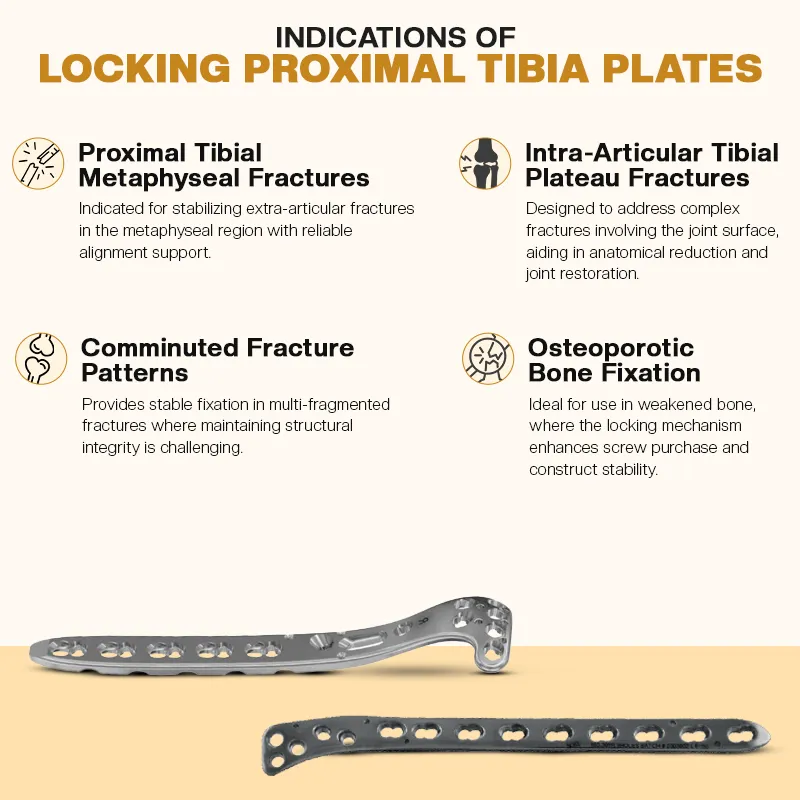
Indicated for stabilizing extra-articular fractures in the metaphyseal region with reliable alignment support.
Designed to address complex fractures involving the joint surface, aiding in anatomical reduction and joint restoration.
Provides stable fixation in multi-fragmented fractures where maintaining structural integrity is challenging.
Ideal for use in weakened bone, where the locking mechanism enhances screw purchase and construct stability.
Supports realignment procedures in cases of malunion or deformity near the proximal
Suitable for re-fixation in cases of implant failure or non-union requiring enhanced stability and support.
Proximal tibia locking plates are primarily indicated for tibial plateau fractures, metaphyseal fractures, nonunion, malunion, and osteoporotic bone fixation. They are especially useful in complex intra-articular fractures where stable fixation is required.
Locking plates provide angular stability, which is critical in osteoporotic or comminuted fractures. They reduce the risk of secondary loss of reduction and improve fixation strength compared to conventional plating systems. Along with proximal tibia plates, distal tibia locking plates also offer similar features.
Yes, locking plates are highly recommended for osteoporotic bone because they provide fixed-angle stability, improving fixation in weak bone structures.
Common materials include:
Material selection depends on market demand and pricing strategy.
Yes, leading manufacturers like Siora offer:
This is critical for distributors building their own brand.
Manufacturers usually provide:
Anatomical contouring is highly important in B2B sales, as pre-contoured implants minimize intraoperative bending, reduce surgical time, and enhance clinical outcomes, making them a strong global preference among surgeons and buyers.
If you are interested in our products and want to know more details, please leave message here, we will reply you as soon as we can.
